
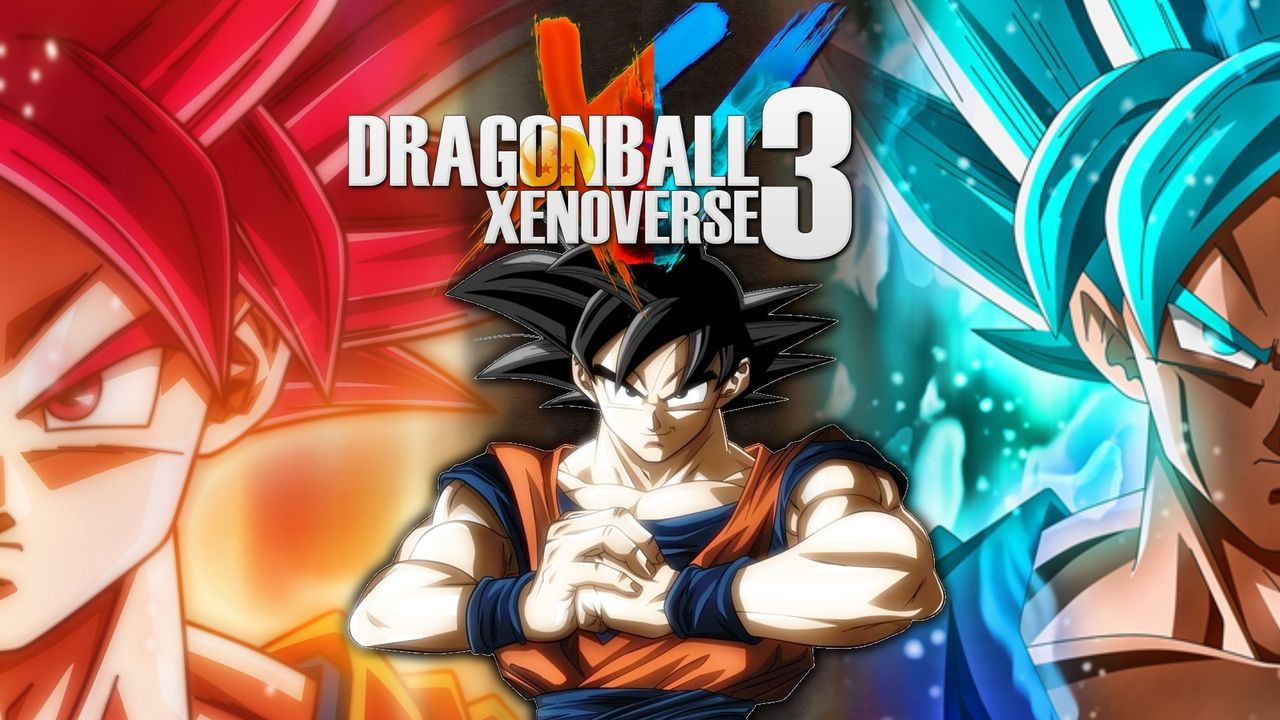
When Dragon Ball Xenoverse 3 was announced, most of the conversation focused on what comes next for the series.
New characters. New systems. New stories.
For longtime fans of Dragon Ball games, however, another name stood out.
Dimps.
The Osaka-based studio has been working on Dragon Ball games for so long that it's easy to overlook just how unusual that relationship has become. Franchises change. Publishers change direction. Development teams move on. Yet across multiple console generations, Dimps has remained a familiar presence in the world of Dragon Ball.
Xenoverse 3 is simply the latest chapter.
To understand why that matters, it helps to go back to the beginning.
The Studio Behind the Studio
When people talk about Dragon Ball games, they rarely talk about the developers behind them.
Yet the story of Dimps begins with some of the most influential figures in fighting game history.
The company was founded in 2000 by industry veterans including Takashi Nishiyama and Hiroshi Matsumoto, both of whom had previously worked at Capcom and SNK. Nishiyama's résumé alone reads like a tour through arcade history. He directed Kung-Fu Master in 1984, helped create the original Street Fighter, and later moved to SNK, where he played a key role in the creation of Fatal Fury and The King of Fighters.
Those are the kinds of names usually associated with arcade cabinets, fighting game tournaments, and genre-defining classics.
Dragon Ball would come later.
And surprisingly quickly.
Just a few years after Dimps was founded, the studio was entrusted with one of Japan's biggest entertainment properties.
Before Xenoverse, There Was Budokai
If you grew up during the PlayStation 2 era, there's a good chance your first encounter with Dimps came through Dragon Ball Z: Budokai.
Released in 2002, Budokai arrived at a time when anime games were often viewed as disposable licensed products. Many existed primarily to support a television series rather than stand on their own as games.
Budokai felt different.
The cel-shaded visuals captured the look of the anime in a way that felt impressive for the time. Characters transformed during battles. Beam clashes filled the screen. Story moments were recreated with a level of spectacle that many fans had never seen before.
Today it is easy to take those ideas for granted.
In 2002, they felt revolutionary.
The series became one of the defining Dragon Ball games of the PlayStation 2 generation and established Dimps as one of the developers most closely associated with the franchise.
For many players, they didn't know the studio's name.
They just knew that Dragon Ball finally felt right.
The Long Road Through Dragon Ball History
What makes Dimps' Dragon Ball story unusual isn't a single game.
It's the consistency.
The studio kept showing up.
After Budokai came Dragon Ball Z: Burst Limit. Then Dragon Ball Online. Then Dragon Ball Heroes. Then Dragon Ball Xenoverse. Then Xenoverse 2. Then Dragon Ball Legends. Then The Breakers.
Across arcades, consoles, handhelds, mobile devices, and online games, Dimps became one of the few studios that continuously evolved alongside Dragon Ball itself.
Most licensed franchises move between developers every few years.
Dragon Ball certainly has.
Yet Dimps has quietly remained one of the constants.
For industry veterans, that's arguably more interesting than any individual release.
Very few studios stay connected to a major franchise for more than two decades.
Fewer still help shape multiple generations of it.
The Xenoverse Idea
When Dragon Ball Xenoverse launched in 2015, it represented another shift.
Most Dragon Ball games ask players to relive familiar events.
Xenoverse asked a different question:
What if you could step inside them?
Instead of controlling Goku or Vegeta from start to finish, players created their own character and joined the Time Patrol, protecting Dragon Ball history from unexpected changes.
It sounds obvious now.
At the time, it was a surprisingly smart reinvention.
The concept allowed the developers to revisit iconic moments while constantly rewriting them. Famous battles could play out differently. New villains could appear. Entire timelines could diverge from the source material.
Rather than simply retelling Dragon Ball, Xenoverse expanded it.
The series found a space of its own.
The Sequel That Refused to Leave
Perhaps the most remarkable thing about Xenoverse wasn't the first game.
It was the second.
Released in 2016, Dragon Ball Xenoverse 2 became one of the longest-supported Dragon Ball games ever made.
Years passed.
Then more years.
New story content arrived. New characters were added. New platforms appeared.
The game survived long enough to span multiple hardware generations, evolving from a traditional sequel into something closer to a living platform for Dragon Ball fans.
That kind of longevity is rare even among major franchises.
For a licensed game, it's almost unheard of.
Looking back, Xenoverse 2 feels less like a sequel and more like an era.
Xenoverse 3 and a Familiar Name
Which brings us to Xenoverse 3.
The announcement naturally generated excitement among Dragon Ball fans, but it also highlighted something easy to miss.
More than twenty years after Budokai, Dimps is still here.
The studio has worked on Dragon Ball games during the PlayStation 2 era, the HD console generation, the rise of online gaming, the mobile era, and now modern cross-platform ecosystems.
Very few developers can point to that kind of history with a single franchise.
What's especially interesting is how little attention the studio itself receives.
Fans remember transformations, villains, and dramatic story moments. They remember Goku, Vegeta, Frieza, and Cell.
Meanwhile, the same developer keeps appearing in the credits.
Not because every Dragon Ball game looks the same.
Quite the opposite.
Budokai wasn't Burst Limit.
Burst Limit wasn't Xenoverse.
Xenoverse isn't Legends.
And Xenoverse 3 will almost certainly need to find its own identity as well.
That ability to evolve alongside the franchise may be the most interesting part of the story.
Still Fighting
Game history tends to celebrate creators, characters, and landmark releases.
The studios that quietly stick with a franchise for decades often receive less attention.
Dimps is one of those studios.
Its roots trace back to some of the architects of the fighting game genre. Its portfolio includes everything from Sonic Advance to Street Fighter IV support work and a long list of Dragon Ball projects. Yet for many players, its most enduring legacy may be the simple fact that it never really left Dragon Ball behind.
The announcement of Dragon Ball Xenoverse 3 is exciting because another Dragon Ball adventure is on the horizon.
But it is also a reminder of a longer story.
More than twenty years after Budokai helped define the PlayStation 2 generation, the same studio remains part of Dragon Ball's future.
In an industry that rarely stands still, that's a legacy worth paying attention to.
Explore More
Official Game Page
[Link Placeholder]
Official Announcement Trailer
[Embed Placeholder]
Gameplay Video
[Embed Placeholder]
Dragon Ball Games History Documentary
[Embed Placeholder]
Dimps on Creator World
[Creator World Profile Link Placeholder]